Category Archives: Uncategorized
Rick Rubin * Music Guru

What do the Beastie Boys, Jay-Z, the Dixie Chicks, Johnny Cash, and Public Enemy all have in common? Rick Rubin, thats what. He is one of America’s most well known talented producers and has collaborated with almost every artists and any musician you can think of. He has been producing records since the early 1980’s and continues to work on todays most popular music. The impact Rick has had on music goes beyond words and his dedication and story is very inspiring. Growing up in New York, Rick listened to a lot of rock and punk music. As a student, he started to become interested in rap and immersed himself in the local scene. He began to produce his own records and in 1982 he started his own label, Def Jam Records. Rick didn’t really know anybody in the hip hop scene so when he met Russell Simmons, who is another Hip Hop icon and also helped lift the label to the next level, the two connected immediately. In 1984, Def Jam Records had their first hit single with LL Cool J’s ‘I Need A Beat’ and the rest was history.
Def Jam became one of the biggest labels and was home to a lot of hip hop and urban music. Throughout the years, disagreements within the label would force Rick to leave and start a new label called Def American. This is really where Rubin’s talent and skill began to show with his style of production. He signed heavy metal bands like Slayer and led the Red Hot Chili Peppers to multiplatinum success. One characteristic that sets Rubin apart from other producers is his style and approach towards the music. With early rap and hip hop records, Rick changed the structure and format to make them sound more like pop records. Before that, these records weren’t really popular and by adding choruses and hooks, the records began to sell. He is very spiritual in the studio and closes his eyes while listening to a song. With no notes to remember things, he just feels the music and critiques the work in a very intriguing way. Another characteristic that sets Rick Rubin apart from the others, is his way of changing artists and their sound. He can make any musician he works with that much better by altering their sound a little. He was one of the first to produce a crossover rap/rock record when working with Run DMC and Aerosmith to create the well known hit ‘Walk This Way.’ Rick encourages these musicians to create songs outside of what they are use to by expanding their knowledge in different genres to create something unique.
The impression Rick Rubin’s records have on me as a listener is inevitable to the fact that he has produced a majority of popular music from the 1980’s till today, making me just really appreciate his work. Almost everything I’ve listened to has been produced by Rick. From Metallica, Linkin Park, AC/DC to Jay-Z, Adele, and even some of South Park’s comical music albums. This guy is literally everywhere! As an industry professional, the impression Rick has on me is to always strive in creating quality music for the ages instead of simply making music. What makes him so good at what he does is his open approach with every genre and just being a true fan of the music. He strongly believes in helping artists and bringing out the best in them from the perspective of a fan instead of a producer. He has no technical ability what so ever and can’t even work a board but his assistance is needed in the creative process since he knows what sounds good and what a song needs to make it successful.
The knowledge I have learned from Rick Rubin will set me apart from the rest and help me advance my career goals within the next five years. He isn’t a musician and is far from the technical type, yet he still found great success in the industry. If there’s anything I learned from him is to not let others bring you down or think an idea is wrong. His whole life, he has been an outcast and was always out of place but that didn’t stop him from being who he is today. By applying some of his great wisdom into my work and goals, I think the possibilities can be endless. Who knows, maybe one day I’ll have the honor in meeting this legend and the privilege of possibly working together.
AIA Blog 2 – UDK Lava Mine Sounds
For my final project, I had to create the sounds for a map called ‘Lava Mine’ and implement them correctly into UDK. Like my previous project, I used Pro Tools 10, Logic, UDK, as well as the Full Sail sound library, and my own sound library to create everything. When I first tested the map, to see what kind of feel and design I was going to give it, I instantly knew I wanted to make it dark and doomful. The map itself is an underground lava cave with lava oozing out of the walls. My first asset was to create two ‘Ambience Interiors’ to set the mood and feel of the map. For my first Ambience, I kept it simple and pulled a ‘Cave Ambience’ from my own library. Since the map is underground, I chose this sound because it is mostly a low rumble and it gives the feel of being inside a volcano that is soon to erupt. My second ‘Ambience Interior’ sound was fairly the same as the first one. However, the second one has water drops with a light reverb. It sounds a little more eerie but the low rumble still gives it the overall feel of being trapped in a volcano. I then edited both of these Ambiences to make them seamless loops so that they could be heard continuously with no pops or clicks.
The way I implemented these two Ambiences into UDK was fairly simple. I used an AmbientSoundSimple actor, which basically loops the whole time and I set both to play automatically. I put one on one side of the map and the other on the opposite side. I did this so the low rumble could be heard anywhere the player is and had them overlap with each other towards the middle. I set the Min levels for both of them to cover the whole map and the Max levels to cover a good part of the middle. The Min volume was kept at 0.7 and the Max volume was kept at 0.85. I wanted to make it close to equal in volume with no drastic drop or increase. In these first two videos below, I basically just demonstrate my ‘Ambience Interior’ sounds and walk around different parts of the map.
Along with my ‘Ambience Interior’ sounds, you can also hear some Stingers in the background. These six different sounds make the map more believable and immerse the player even more into the game. Like my Ambience Interiors, I grabbed these sounds from my sound library, as well as Full Sail’s library. My first Stinger sound is the sound of rocks being moved around. I chose this sound because it gives the impression of falling rocks and debris as the volcano continues to rumble. My second Stinger sound is the scream of a woman in the distance. What makes this scream so unique is that she sounds as if she is drowning in the lava. I thought it fit the game map very well in making it a little more startling. I wanted to add more unexpected and frightful sounds so I continued searching through the libraries for creature sounds. My third Stinger is the sound of a low growl and snarl. It blends in a little with the rumble from the Ambience but in some quieter parts of the map, it can be heard a little more. It gives the impression that something big and mean is behind the cave walls.
A cave wouldn’t be a cave without the sounds of bats flying. So for my fourth Stinger I chose the sound of a lot of bats flying inside the cave. It sounds like a flock of them being startled and shrieking their way out. The fifth Stinger is another growl and snarl but it sounds a little more hostile than the first. This Stinger also stands out more than the first growl making it seem like various creatures are living underground. My last Stinger is yet another creature and this one sounds like the most dangerous. For this one, I chose a creature that is eating and ripping something apart. It almost sounds like it is snarling and eating a bat. You can hear a shriek in the back as he continues to feast on its meal.
These set of Stingers were implemented into UDK by using SoundCues and AmbientSoundNonLoop actors. I first created two separate SoundCues, one called ‘Stinger A Cue’ and the other ‘Stinger B Cue.’ I separated them into two groups because I wanted to give them different delay times. Delay Nodes were added so that each sound can be played at random times. Stinger A was set between 2-6 seconds and Stinger B was set to 4-8 seconds. I also added a random node to play each Stinger sound in a random order. Finally, since these are one-shot sounds, I used an AmbientSoundNonLoop actor for each Stinger Group. I then set each SoundCue to one of the NonLoop actors and kept the volumes at the same level as the Ambience.
The next two sounds I had to create were that of a wooden elevator being pulled up and down by rope. For this one I pulled another sound from the library named ‘Creaks and Rope Stretch.’ I had to cut different parts of the audio and put it together differently to create the effect of the elevator going up and down. For the ‘Elevator Up’ sound, I used more of the creaking noise of the audio. This gave it the effect of forcing weight on the wooden crate and hearing it creak while going up. For the ‘Elevator Down’ sound, I did the opposite and used more of the rope sound. I added more of the rope movement as is goes back down and shifts itself in the opposite direction. I implemented the ‘Elevator’ sounds by using two SoundCues. I added a modulation node to change the pitch of the sound every time it went up or down. I also added an attenuation node to control how fast or slow the sound would fade when shifting. Since the set up of the ‘Elevator’ was already in place, all I had to do was connect the inputs correctly in Kismet and add the SoundCues to the PlaySounds in Kismet. In the video below, you can hear the Elevator sounds along with other assets.
One of the main sounds I had to create was the sound of the ‘Lava Flow’ and ‘Lava Steam.’ Like most of my sounds, I pulled both of these assets from the sound library. For my ‘Lava Flow’ I slowed it down just a little more than the original to give it that thick texture sound. I kept my ‘Lava Steam’ sound dry and simple since it really didn’t need any change. The implementation was also simple and the type of actor I used for both of these assets was an AmbientSoundSimple. There are different types of lava flows through out the map. Depending on how big or small the flow was, determined how much Min/Max level and volume I needed to add. I kept the Max level right around where the lava ends so the player can hear it at its loudest when they are closest to it. The Min levels all depended on how big the lava was flowing. I set it so it can be heard at a longer distance if the flow was heavy. I only added the ‘Lava Steam’ sound to the big flows as well, since you don’t really see any steam coming from the little ones.
Other sounds you hear around the map are the burning of the ‘Fire Pots,’ and the ‘Health Pick-up’ sound when walking over the bright green glass jars. I pulled the sound of fire burning from the sound library to get that crackling sound, like a campfire. These fit perfect and all I had to do was use AmbientSoundSimple actors to implement them wherever there was a fire pot, small torches, and campfires. The one sound I created myself was the ‘Health Pick up’ sound of the little green jars around the map. I first used the sound of a hanger being hanged in a closet and added the Logic Preset named ‘Pumping Looping’ and this gave it that initial sound to let the player know they just picked something up. I then layered it with this ‘plungy’ sound effect that makes you feel boosted and new. I also added the Logic preset ‘Mystery Taps’ to give it more of a bright and springy effect to it.
My last and final sound was the ‘Lava Burn’ and this is when the player walks over the lava and gets burned. At first, I thought this would be the sound of the lava burning or bursting as it bubbles and steams. The sound I used doesn’t really sound like someone getting burned and sounds more like lava flaring. It sounds ok but I think I could have used a better sound for this one. I implemented this asset by creating a SoundCue and adding attenuation and modulation nodes. Since everything else was already set up, all I had to do was add the SoundCue and put it on a separate mixer. This way, it would not interfere with the grunt and moan sounds when being burned.
I enjoyed making these sounds for this UDK map as much as I did for the first project. Overall, I was pretty satisfied with the final results and how everything was heard. I hope this blog entry gave a clear understanding on the implementation and aesthetics of this project. Thanks for reading!
AIA Blog 1 – Shock Rifle Weapon Sounds
When creating my own weapon sounds for this first person shooting game, I had somewhat of an idea of how I wanted my gun sounds to be heard. What I used to create these sounds were, Pro Tools 10, Logic, and then I implemented them into the UDK editing engine. Since the game itself is set in a futuristic robotic world, I tried using a lot of synths and electrical sound effects to make it more believable. For my first sound, I had multiple layers to create the sound of a weapon being picked up. I began with a simple smoke detector beep to let the player know they’re picking something up. I then added the sound of a hair spray bottle for that initial pick up sound as well. Followed by a hanger being hanged in a closet and this gave it that futuristic new sound as well as the sound of the gun being switched out. Lastly, I added a zap synth that builds up to give it that ‘new pickup’ sound and to let the player know they now have switched or picked up a new weapon.
My second sound was the pick up of ammo as the player walks over the purple glass jars. For this sound, I mostly wanted the sounds of guns being reloaded to give it that ‘clicking’ sound. I began with the simple sound of a pistol being cocked back and left it dry with no effects. I then used a dry fire from a musket to add to the pistol sound. This gave the overall asset that pick up sound of ammo and it also gives the player that sense of reload. Next, I added this quick flint sound just to add depth and texture to the ammo pick up. I finally added a new zap synth and put a different effect than the weapon pickup sound. This lets the player know that ammo has been reloaded into their weapons list. When adding them into UDK, the implementation of the ammo and weapon pick up sounds were pretty basic. All I had to do was add them into a Play Sound in Kismet and make sure they were connected properly. Since these are just pick-ups on the map, the initial sound just plays when the player walks over the purple jars or when he picks up a new weapon.
The two most important sounds I had to create were the main and alternate fire weapon sounds. The gun is a futuristic shock rifle with a purple electrical tube down the middle. I knew off bat that I wanted to make it sound somewhat like a laser gun but a little stronger sounding. For the main fire, I started off with the sound of an arrow moving fast. I added a Flanger as an effect to give it that laser sound. I then layered it with the sound of a heavy body impact and gave it a dark ‘bassy’ effect. It created this kick back sound to the gun and more depth. Finally, to give it a little more texture, I used a light flamethrower burst sound for a light traveling effect. To keep it from sounding repetitive, I added another main fire sound and kept it relatively the same as the first one. However, for the second one, I used these pings and phasers sounds instead of the heavy body impact sound. It gives it more of a whipping traveling sound. I created a layer asset for my main fire sound to add more detail and to make it sound original. All I did was use this whip web splat sound and added some space designer to it. It gives this strong whip sound as well as that final shot sound. Just to give it a low rumble, I also added this swelling and rushed effect. I left it dry and it almost sounds like light saber ‘swoosh.’
The alternate fire is the little electrical orbit that travels at a steady pace when shot. For this one, I began by using a 12-gauge shotgun blast from close. I took some of the low end out to not make it sound so loud and this created the sound of the alternate fire going off. I then added the initial sound of a tennis ball being hit and moving. This gave the effect of the gun being fired as well as the tail end sound of it traveling in this slow ‘spacey’ way. To complete it, I then added an electrical current sound and shifted it up in pitch as well as add some reverb effects. Instead of having an alternate fire sound, I added a fire impact sound so the player can hear the hit of the alternate fire. For this asset, I used the same heavy body impact sound from the first fire but with different effects on it. It gives the sound of an electrical hit or block once making contact with whatever object. Then, I just added the sound of exploding debris and it was enough to make it sound just right. Just like the main fire, I created a layer asset to give it its own original sound. What makes the alternate fire unique is the synth sound I started off with. Just like almost all the other sounds, I added the space designer effect and it gave it this futuristic bright sound. I layered it with a thunder sweep and pitched it down as well. The initial thunderclap blends in well with the alternate fire sound and adds depth to the electrical current. I then added some different electrical current sounds to give it even more of that electric orbital effect.
The implementation for both the main and alternate fire was fairly the same. I first created a Sound Cue for each fire sound. In the Sound Cue window, I added random, attenuation, and modulation nodes. The random node was used to switch between the alternate sounds of the main fire. The attenuation node was used to control how fast or slow the sound fades out as it travels. Lastly, the modulation node was used to change the pitch so that the fire sounds don’t sound the same when triggered. I connected the layer assets to each corresponding fire sound. This made it possible to hear the layers every time plus its initial fire sound. The Sound Cues are triggered by the action of the player and depended on whether the player shoots the main or alternate fire.
The last sound I created for the alternate fire was the travel sound of the electric orb. I really didn’t do much for this asset and basically just grabbed the spraying sound of mousse. For the effects, I added this preset from Logic called ‘Springy Luster’ and pitched it up a little so it wouldn’t sound like mousse. I then made it a seamless loop so it could travel any distance and still sound right without any clicks or pops. The implementation was simple and all I really did was add some Min/Max levels. This controlled the relationship between what the player hears when the alternate fire goes off and the distance the orb travels. As the electric orb travels farther away from the player, the less the sound is heard, making it sound more realistic. I also added a looping node so that it can be continuously heard until it makes impact.
One of my last sound assets was the sound of the main and alternate fires in a combo explosion. This is when the alternate fire gets fired first and then the main fire follows to give this big explosion. What I did for this one was just combine both original sounds from the main and alternate fire. I took both of the sweetener layers and simply adjusted the volumes on both to blend them in together. I then layered it with this small explosion sound and used space designer to make it sound like a big electric blast.
I hope this blog post gives a clear understanding on the aesthetics and implementation I used to create these sounds and how they actually work in the game. Below is a short video of my sounds already in the game. I enjoyed creating these assets and learned a lot of new information in regards to interactive audio and game design.
Afrika Bambaataa * Planet Rock

In the late 1970’s, different types of music genres were being heard across the US. The scene in New York was very urban with sights of graffiti walls all over sub stations, b-boys/girls break dancing to hip hop rhythms, and boomboxes blasting disco or funk music. As a DJ growing up in the Bronx, Afrika Bambaataa became a Hip Hop pioneer with his work and creative style. He blended a lot of hip hop beats with other genres of music and was the original creator of this electro funk music that people in the US never really heard before. Bambaataa would throw these big block parties and liked to play anything from funk, R&B, disco, and soul. He would mix hits from the Rolling Stones and the Beatles into his sets, being very experimental and innovative. In 1982, Bambaataa released a single that would change music and open new doors for other genres. Titled ‘Planet Rock,’ Afrika was able to combine electronic music and hip hop and delivered a classic. Influenced by the work of Kraftwerk, he combined the eerie melody from the song ‘Trans Europe Express’ and the beat from the song ‘Numbers.’ He used other instruments like synthesizers and vocoder sounds for the robotic voices. Afrika did not only impact and change hip hop music but he opened the door for new genres likes techno and other electronic influenced music.
One characteristic that makes Afrika Bambaataa different as an innovator is the way he influenced new producers and artists in music. He influenced producers like the Neptunes, who use a lot of electronic sounds to create some good dance music. As well as Kanye West when he released ‘808’s & Heartbreaks’ using the same Roland TR-808 drum machine that Afrika and Kraftwerk used to create some of their music. He was able to surprise the masses with his new electro funk music and showed the potential hip hop music really had. Another characteristic that made Afrika so innovative and different from other DJ’s was the influences he had to create this music. He would listen to everything from R&B, funk, disco, electronic, and traditional music and become inspired to blend a new sound. He then would be able to mix something so new and futuristic by combining two or more of these genres. New genres like house, dup-step, and even dance music began to evolve from this into something greater and popular.
As a listener of Afrika’s music, I really enjoy the fusion between electronic and hip hop music. I am a big listener of hip-hop music and what Afrika created was something different and at the same time enjoyable to listen to. He made songs that people could dance to and blended everything very uniquely. As an industry professional, I can only have the utmost respect for this pioneer. At the time, a lot of people didn’t believe rap or hip-hop music would last too long and Bambaataa was courageous enough to think otherwise. Working with other musicians in other genres and mixing such different sounds together to make them sound as if they belonged together was something really special for music. Afrika Bambaataa was one of the many innovators and pioneers of this electronic music. He continues to influence many artists to this day and will always be known as the ‘god father’ of electro funk music.
Kraftwerk * An Electronic Revolution

In the late 1960’s, a lot of bands from Germany began to emerge and started to create new sounds in music. One group that was very experimental and had the biggest impact in the electronic world of music was Kraftwerk. Their innovative ways and experimental music has influenced many other genres as well. Pioneers Ralf Hütter and Florian Schneider put this group together and were the main songwriters of the band. Being influenced by the city they grew up in, Düsseldorf Germany, Kraftwerk had this very industrial and mechanical sound. They wanted to sound new and create this advanced sound that was the complete opposite of popular music. Their music was very futuristic and they were soon to be known for their motor sounding rhythms, synthesizers, and melodies using flutes and pianos. Their image was more that of scientists than of musicians and they dressed in suits. The band would go through many line ups but by 1974 they had steady members that were able to create a set of successful albums.
The album that skyrocketed their career internationally was called ‘Autobahn’ released in 1974. Produced by Conny Plank, this album gave the concept and idea of traveling on the road. They used motor rhythms and light melodies to give the feeling of driving a vehicle on the road. ‘Autobahn’ was some what influenced by what the Beach Boys were doing and it became very successful in the US and UK. Their next album was called ‘Radio Activity’ and it was released in 1975. It was also a concept album as well but was very different sounding than their previous work. It gave the idea of nuclear energy and the workings of the radio. This is were they began experimenting with electronic sounds such as tone generators, as well as synthesizers, and their ‘trademark’ flute melodies. The band was able to create this new experimental sound and at the same time sound some what pop. The next album titled ‘Trans Europe Express,’ released in 1977, was set in the theme of traveling on a train across Europe. The rhythm was the sound of train wheels hitting the train tracks and it gave a very different yet perfect rhythm. Even though it was a flop record at first, it would later become one of the most classic records in electronic music. ‘The Man Machine’ was the name of their next album that was released in 1978. For the first time, they were able to link a sequencer to the drum machines and they were played automatically. The album was very robotic and machine like in sound. This album wasn’t really a concept album but the group had much success with it.
A characteristic that makes Kraftwerk’s music one of the biggest influence on electronic music is their production quality. Even though they weren’t the first to use oscillator’s, synthesizers, and tone generators in music, they were able to use these electronic machines and produce some great sounds. They were very experimental with their work and you could hear their new approach towards music in every album they released. Another characteristic of Kraftwerk was their concept albums. With ‘Trans Europe Express,’ they were able to actually make you feel like you are riding a train across Europe. They implemented these sounds to give you more of the experience of what their concepts and ideas were. They have influenced many artists like Neil Young and Afrika Bambaataa and were able to pave the way for house and techno music.
The impression Kraftwerk left on me as a listener is very experimental and their music really emerges me into their concepts. I like how their albums sound so different and machine like. They were able to create these different rhythm sections and melodies and that gave them their own ‘trademark’ sound. As an industry professional, I have a lot of respect for them and trying something new. Kraftwerk was able to take these electronic sounds that some people would not even consider music and turn it into this new art. They were pioneers in electronic music and influenced genres like Hip-Hop, Ambient music, and a lot of artists in popular music. They used new technologies and built their own devices to create this experimental music. If you don’t enjoy their music, they should at least be respected for their innovative ways.
Marvin Gaye * What’s Going On

Marvin Gaye, one of Motown’s most visionary, gifted, and inspirational artists to ever emerge from the label, delivered one of his most classic albums in 1971 called, ‘What’s Going On.’ Being signed to Motown, Marvin found it very difficult and somewhat controversial to release ‘What’s Going On.’ Prior to the albums release, Motown had its very own distinct sound signing mostly R&B artists. Marvin was known for his Jazz influenced music while singing about love and women for the most part. He was also known for his duet albums with female singers such as, Tammi Terrell, Mary Wells, and Kim Weston. During the time of the albums pre release, a lot of social and national issues influenced Marvin into making this album.
A lot of young men were being shipped out to the Vietnam War and becoming addicted to the heroin. Marvin’s younger brother, Frankie, was one of the many men enlisted and this touched Marvin very much. He saw images from the war and was horrified by pictures of children eating out of garbage disposals. Violence in the streets and the death of Martin Luther King really affected him. All this, along with the death of his singing partner Tammi Terrell, who died from a brain tumor, inspired Marvin to create this uplifting album. Obie Benson, who came up with the song’s idea, and Al Cleveland originally presented ‘What’s Going On’ to Marvin and it became the albums first hit single. However, releasing the record and album would not be as easy with Motown’s owner, Berry Gordy.
To begin with, the relationship between Marvin and Berry was never really smooth. Marvin was married to Berry’s sister and the two would butt heads constantly. When Marvin first presented the album to Gordy, he called it, ‘the worst thing I’ve ever heard in my life’ and refused to release it. He said it would ruin Marvin’s career and it did not have the Motown sound they were known for. Despite the negative criticism, Marvin refused to budge and did not change the albums sound. He patiently waited until the label desperately needed another Marvin Gaye record and they finally released it in 1971. What set ‘What’s Going On’ apart from any other soul recording of the 1960’s and 70’s was the lyrical content of the album. Marvin sang about all the negative things that were taking place around the world and made people aware of these issues. Other artists did not dare to write about such sensitive topics such as the War, protests, riots, and drug addiction. Another characteristic of ‘What’s Going On’ is the overall sound and production of the album. Marvin was able to combine Jazz, Funk, Soul, and R&B to create this instant classic. Motown’s sound was strictly R&B and this mix of genres did not sit right with them at first but the overall success it had could not be argued with.
As a listener, the overall impression and feel of this album is extremely elevating and inspirational. The issues Marvin sings about makes the listener somewhat emotional and at the same time moved in trying to make a difference in the world. As an industry professional, I have the utmost respect for Marvin Gaye and his courage to release such a record. His refusal in changing the sound and production of the album makes him that much more of a true artist who listens to his heart. His creativity and inspirational music moved millions around the world. Marvin Gaye’s ‘What’s Going On’ is at the top of my all time favorites and is very much appreciated in music.
Brian Eno * 40 Years of Changing Music

Producer, self-proclaimed non-musician, Ambient music creator, and one of music’s most innovative and creative artist, Brian Eno, is all this plus more. From his flamboyant days in the glam rock band, Roxy Music, to his production days working with bands like U2 and Coldplay, Eno has proven to be one of the most prolific artist in music. Growing up, Brian was very influenced by what he called ‘Martian Music’ hearing doo-woop and early rock and roll from American Armed Forces Radio. Other musical influences he had ranged from classical to rock, from experimental to a number of different traditions such as African and Arabic music. The avant-garde and their tradition had an immense impact on his career as well. Composer Terry Riley and author John Cage sparked the mind of Brian to create this new music and sound. As a member of Roxy Music, Brian felt restrained with his creative ability and when the band broke up, he felt liberated to finally try out his new ideas and theories.
The two albums that define Eno as a daring and creative person are ‘No Pussyfooting’ with Robert Fripp and ‘Another Green World.’ Eno first met guitarist Robert Fripp when collaborating with the band King Crimson. The two shared similar sensibilities and began working on ‘No Pussyfooting’ immediately. The album only includes two long music pieces and it is basically Eno’s experimentation with two tape recorders and Fripp’s electric guitar. Eno would use some of Fripp’s guitar patterns and run it through the recorders to create multiple-delay guitar sounds and called it ‘Frippertronics.’ With this album, he was able to create tape-loops and sampling techniques that were later used in other genres of music. With ‘Another Green World,’ Brian began to experiment with other various techniques and used the sound of nature in his music. He began to test his ambient theory and used environmental sounds to influence the way he heard and saw music. Unlike ‘No Pussyfooting,’ this album had 14 songs, five in which included lyrics. The other nine songs include Eno on different instruments along with other famous artists. The two albums show the musical chemistry Eno and Robert Fripp had. Fripp had his own guitar solo on ‘Another Green World’ in a song called, ‘St Elmo’s Fire.’ Both albums give the overall impression of Eno’s experimental and innovative approach towards music. He invented this new mood and form of language when creating these two albums.
One of the main qualities that set Brian Eno’s projects apart from other recordings are the influences he had on popular music. Eno created new techniques early on in his career by using the studio to create these sounds such as sampling, tape-looping, and delay. These techniques would later be widely used in electronic and hip-hop music. Another characteristic that sets Brian’s projects apart from anything else was his way of production. Eno created what is known as the Oblique Strategies in which a card was randomly chosen from 64 cards. Each card would suggest a creative idea or possible solution in which was carried on in the production. This helped when artist or producers were stumped and could not move on with a project. He carried this technique with him and influenced many with his new approach towards production.
As a listener of Brian Eno’s projects, the impression it gives me is very experimental and unique sounding. I’ve always listened to a lot of ambient music and had no idea who actually created such soothing and simple music. I like the way he used synthesizers and pianos to manipulate the sound and create something never heard before. As an industry professional, the impression it gives me is very innovative and ground breaking. Eno really changed the way people wrote, felt, heard, and even saw music. He would go into a studio with no idea in mind and feed off the chemistry of artists and the way the music flowed within the session. Eno has remained to be one of the most hard working artist in the industry making him so prolific and known across almost any genre.
The Beatles * Revolver
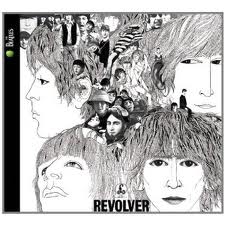
The most successful and influential band in Rock history, the Beatles, delivered a distinctive sounding record that changed their careers and the way they wrote music. ‘Revolver’ was released in 1966 around the time of Beatlemania. Prior to this album, the Beatles were performing and writing music that had to do with relationships, girls, and sexual love. They were at the top of their career and were extremely popular throughout the U.K and U.S. When they first started to record for ‘Revolver,’ instead of writing simple love songs, they went a whole different direction with their sound and image.
Around this time, the band began experimenting and becoming curious with non-musical substances. Paul and John started taking illegal drugs such as LSD and smoking marijuana. Despite taking these illegal drugs, they began to see things differently and were influenced by being even more creative with their ideas. They started recording songs that were very different in sound from popular music and their lyrics were no longer about girls and relationships. The band also did something that no other band had ever done before. They used the studio as an instrument during the making of this album. ‘Revolver’ opens up with the song ‘Taxman’ and you can actually hear the band counting down as they begin the recording process. Its almost like they invite the listener into the studio to get a feel for the making of the album. Not only was ‘Revolver’ different in the recording process, it was also very innovating with the production.
One innovation on the album are the drums and rhythm section on some of the songs. In the song ‘Eleanor Rigby,’ the band didn’t even use any drums or bass at all. Instead, they use a number of stringed instruments to keep the rhythm of the song. They compress the drums in other songs to sound upfront and ‘in your face.’ Another innovation was the use of a Sitar on the song ‘Love You Too.’ They took the Sitar and gave it a rock and roll sound on this indian influenced song. Other innovations on this album include, artificial double tracking to thicken their sound. They did this with most of their vocals to give it a richer and fuller sound.
As a listener, ‘Revolver’ gives me this very relaxed, different, and almost psychedelic impression. I enjoyed listening to the different instruments they used and the different effects as well. It was something that was never really heard during that time. As an industry professional, I can appreciate the work of George Martin as a producer and his innovative ways in creating something new. I like how he used strings as the rhythm section on ‘Eleanor Rigby,’ instead of drums. As a professional I respect what these pioneers did and how they paved the way for popular music. Another classic album to add to your must hear and favorite albums!
 JymmiSanchez